28 Oct 2026
Dunearn House Review: Prices, Layouts and Who Should Buy
Considering Dunearn House? Compare prices, layouts, monthly costs and moving plans to see whether this new Bukit Timah condo suits your next home.
By John Lai
CEA Registration R064872C | Updated 28 October 2026
Dunearn House is worth shortlisting if you want a new home near Sixth Avenue MRT and can wait until around the end of 2030. Its appeal is the established Bukit Timah location, practical family layouts and longer-term plans for Turf City. My main checks are the price of the remaining units, whether the rooms fit your household and how comfortably you can fund the move.
A quick look at Dunearn House
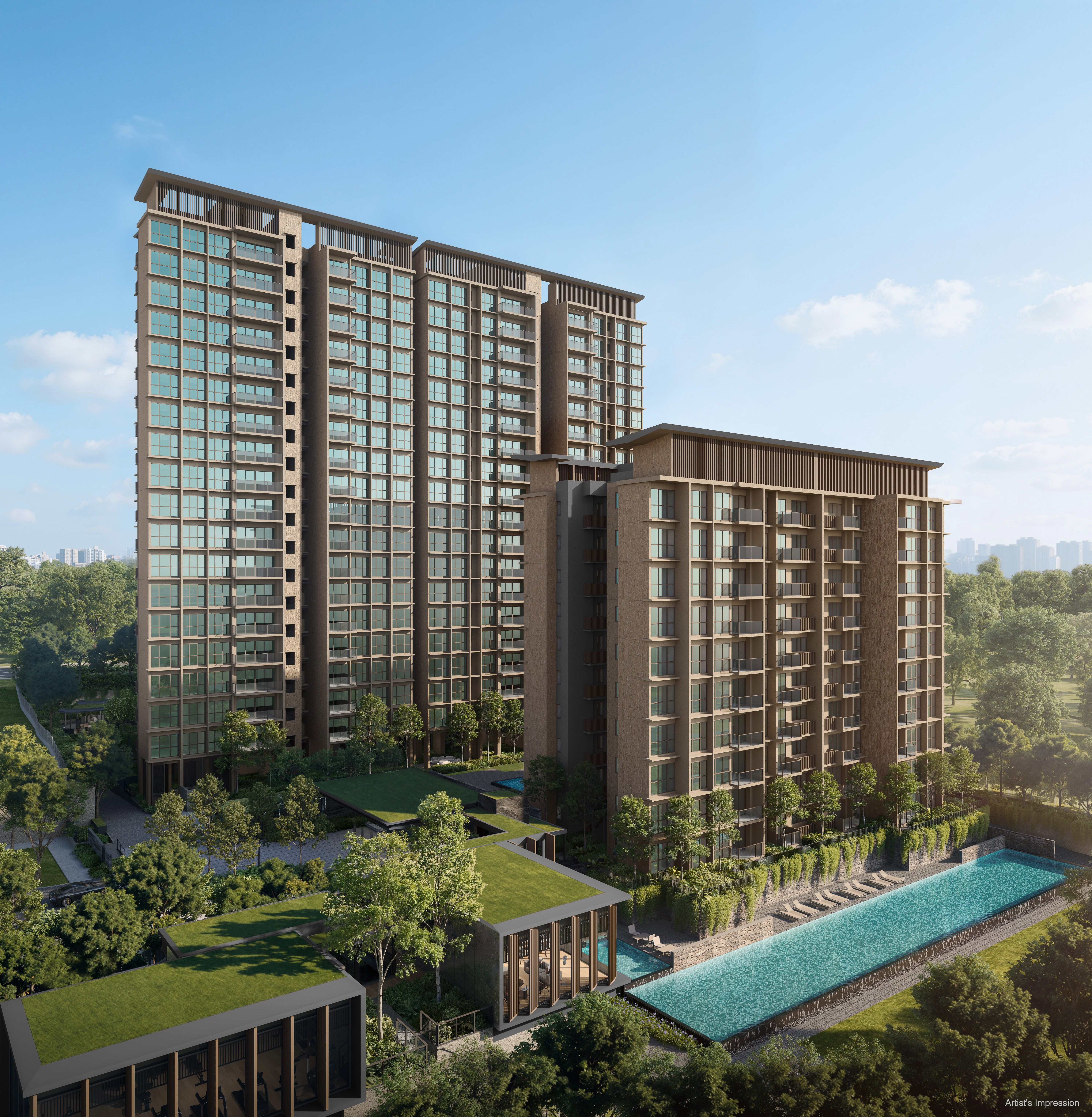
Dunearn House is a 380-home condominium on Dunearn Road in District 11, within the Bukit Timah planning area. Frasers Property, Sekisui House and CSC Land Group are developing it through Phoenix Dunearn Pte Ltd. It has two 19-storey blocks and three 10-storey blocks, with two- to four-bedroom homes. [1][3]
The land has a 99-year lease from 30 September 2025. The developer reported 212 homes sold at an average S$3,140 per square foot during the July 2026 launch weekend.
PropAI Radar - 10 Pointer Project Analysis
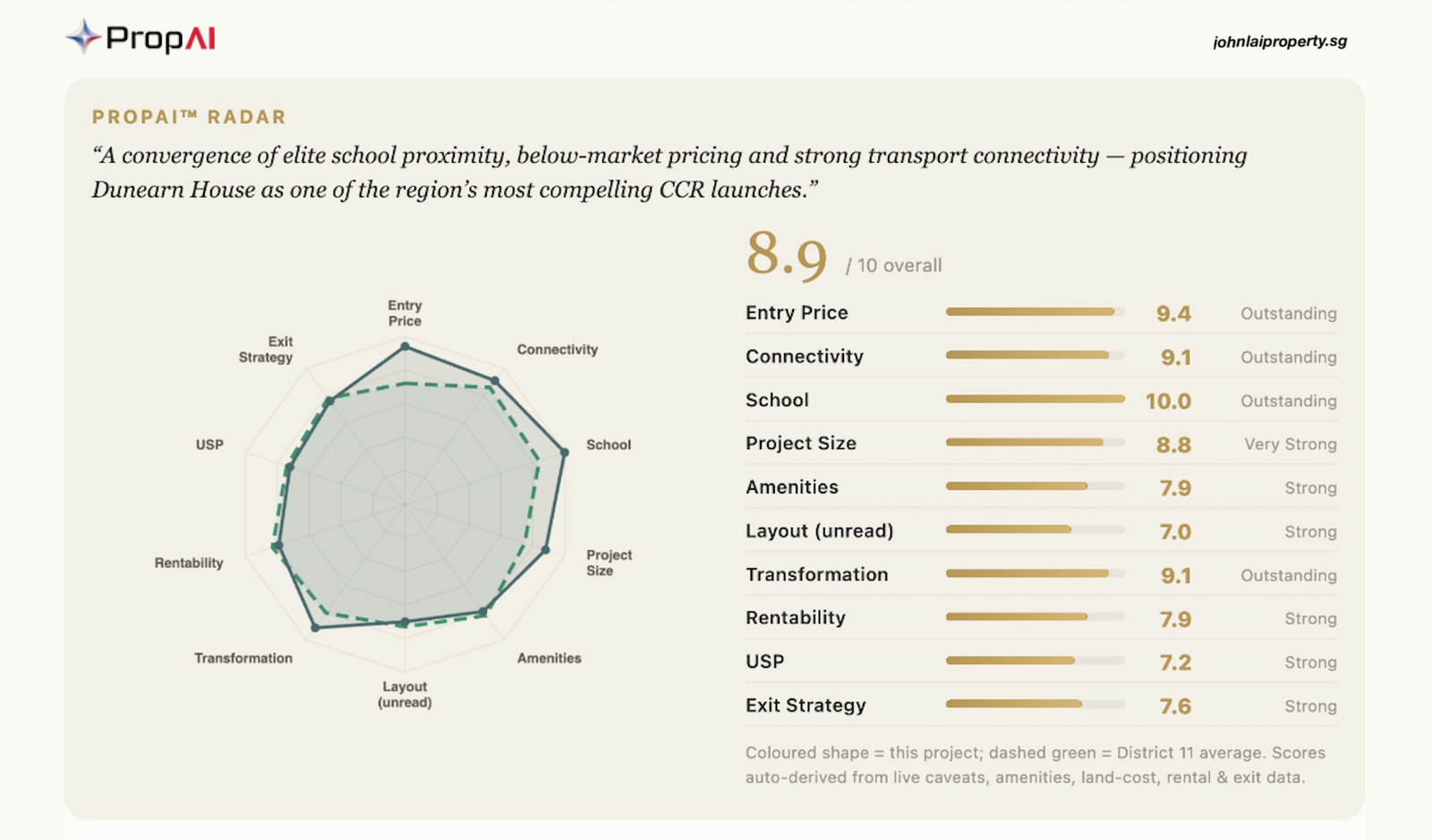
1. Entry Price: How is Dunearn House priced overall?
Dunearn House’s launch-weekend sales averaged about S$3,140 per square foot, which gives a useful reference for the project’s price level. [4] In the 28 October 2026 price list, two-bedroom homes ranged from about S$1.53 million to S$2.07 million, including premium and study options. The remaining three-bedroom premium homes were about S$3.09 million to S$3.39 million, while four-bedroom homes ranged from about S$3.59 million to S$4.65 million. [2]
The main difference is the budget each group needs. The two-bedroom range offers a more accessible way to buy into the project, while buyers who need three or four bedrooms should plan for a budget above S$3 million. The smaller three-bedroom types were already sold out, which helps explain the larger jump to the remaining three-bedroom prices. [2] I would judge value by the space and features you will use, together with the location, rather than the lowest advertised price alone.
2. Connectivity: How easy is it to get around?
The developer places Sixth Avenue MRT about 500 metres away, giving residents access to the Downtown Line. This is useful for households that use public transport regularly.
3. Schools: What are the primary schools nearby?
Families have several established primary schools in the surrounding area, including Methodist Girls’ School (Primary), Raffles Girls’ Primary School and Nanyang Primary School. [3] If your child attends a school nearby, living here could make the school run easier and leave more time for family life. If you are planning ahead, check the route, the school’s admission requirements for your child’s intake year and whether your moving date fits. Living nearby can be convenient, but a school place is not guaranteed.
Primary Schools within 1 km:
- Nanyang Primary ~508m - Raffles Girls' Primary ~602m
4. Project Size: Will 380 homes feel manageable?
With 380 homes, Dunearn House offers a sizeable range of facilities without being a very large development. There are 228 ordinary parking lots and three accessible lots, so you should not assume every home comes with a parking space. Confirm allocation and charges, particularly if your household needs two cars. [1]
5. Amenities: What will I use day to day?
The planned facilities include a 50-metre lap pool, gym, tennis court and children’s play areas. These can make staying home more enjoyable if your family will use them. For errands and meals, short walk to Sixth Avenue shops and Supermarket in Guthrie House.
6. Layout: How do the 2, 3 and 4-bedroom homes compare?
- 2-bedroom homes range from 527 to 678 sq ft and suit buyers who want a compact home with a lower total price. The 527 sq ft layout keeps the bedrooms on opposite sides of the living area, with little space taken up by corridors, although both bedrooms share one bathroom. The 614 sq ft premium layouts add a second bathroom, while the 657 to 678 sq ft study layouts offer two bathrooms and a small area for work or homework. For couples and right-sizing buyers, I would weigh the savings on the smallest layout against the everyday convenience of a second bathroom and extra workspace. [1]
- 3-bedroom homes range from 872 to 1,001 sq ft across the original range. The smaller layouts keep the home more compact, while the flexi and study versions add space for work or storage, depending on the plan. The 1,001 sq ft premium layout is more suited to regular family cooking, with separate wet and dry kitchen areas, a yard for laundry and a household shelter that can help with storage. These extras can make daily life easier, but they vary by layout, and only the premium three-bedroom category remained available in the 28 October price list. [1][2]
- 4-bedroom homes range from 1,184 to 1,378 sq ft and give families an extra bedroom, a larger living and dining area, a yard and a household shelter. The 1,184 sq ft layouts have two bathrooms, while the premium and premium-plus-study layouts have three, with a separate toilet in all these types. The 1,378 sq ft premium-plus-study layout also includes a small study beside the main bedroom, which could be useful for working from home. I see the main benefit as more room for family life and more flexibility as children grow, although you should still check that each bedroom fits the beds and furniture you need. [1]
7. Transformation: What could improve in the area?
- URA plans about 15,000 to 20,000 homes across Turf City, with development taking around 20 to 30 years under its announced plan.
- The Cross Island Line’s second phase, including the future Turf City station, is targeted for 2032.
These changes could improve convenience over time, alongside years of construction and more housing choices for future buyers. [6][7]
8. Rentability: Could renting it out be a backup?
The MRT connection and two-bedroom layouts could appeal to couples and small households who rent. However, Dunearn House has no completed-project rental record yet. At a S$1.526 million purchase price, you would need S$3,815 a month for a 3% yearly return before expenses, assuming rent is collected for all 12 months. This is a calculation, not a rental forecast.
9. USP: What makes Dunearn House stand out?
- Being the first private residential launch within the Turf City masterplan Dunearn House is a rare chance to own a home in Singapore’s prime CCR, at a location that’s not easy to come by.
- Developed by well-known names like Frasers Property, Sekisui House and CSC Land, it’s just a short walk to Sixth Avenue MRT, making daily travel really convenient.
- For families, there are also popular primary schools and plenty of greenery nearby, which makes it a great place to call home.
- Exciting changes coming to Orchard Road and Bukit Timah Turf City, there’s even more to look forward to in this area.
If you’re looking for a home in a prime District 11 location that offers convenience, good schools and long-term potential, Dunearn House is definitely worth checking out. However, buying early in an area’s development can be attractive, but it does not automatically mean buying below future market value.
10. Exit Strategy: Who might buy my home later?
The larger layouts may appeal to families, while smaller homes could attract couples and buyers moving to a more manageable home. Future Turf City projects will also give these buyers more options. A sensible purchase price and a useful layout should therefore carry more weight than a hoped-for increase in prices.
Which Dunearn House layout should I choose?
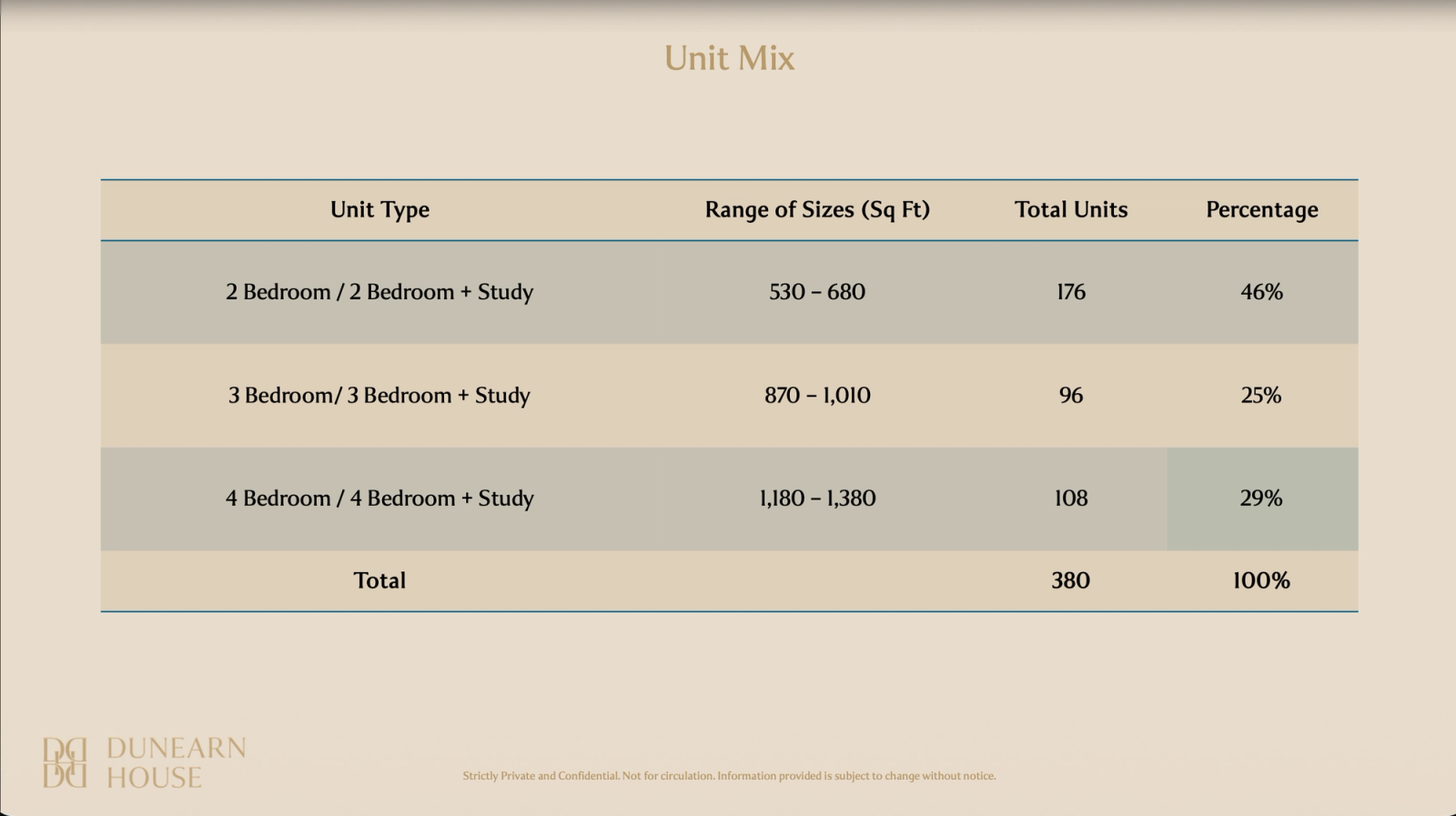
The project has 176 two-bedroom homes, including premium and study versions, making up 46.3% of all units. There are 96 three-bedroom homes across four variations, or 25.3%, and 108 four-bedroom homes, or 28.4%. These are the original project totals, not remaining stock. [1]
For couples and right-sizing buyers, the 527 sq ft two-bedroom starts with the lowest total price. The 614 sq ft premium version has two bathrooms. That second bathroom may be more useful than a higher floor if you regularly have guests or expect an adult child to stay. The two-bedroom-plus-study layouts range from 657 to 678 sq ft, but a small study should not be treated as a full third bedroom. [1]
For families, the 28 October price check lists six remaining three-bedroom premium homes at 1,001 sq ft, starting at S$3.089 million for #02-03. The smaller standard, flexi and study three-bedroom categories were sold out in that dated inventory check. [2]
The 1,184 sq ft four-bedroom starts at S$3.588 million for #02-02. Four-bedroom premium homes start at S$4.037 million, and premium-plus-study homes start at S$4.283 million. Treat these as a dated snapshot and reconfirm the exact unit, incentives and availability before booking. [2]
Also check the unit’s position. The site plan shows homes near Dunearn Road, internal facilities and a future road. The experience can differ by floor and facing. [1]
Is the fourth bedroom worth another S$499,000?
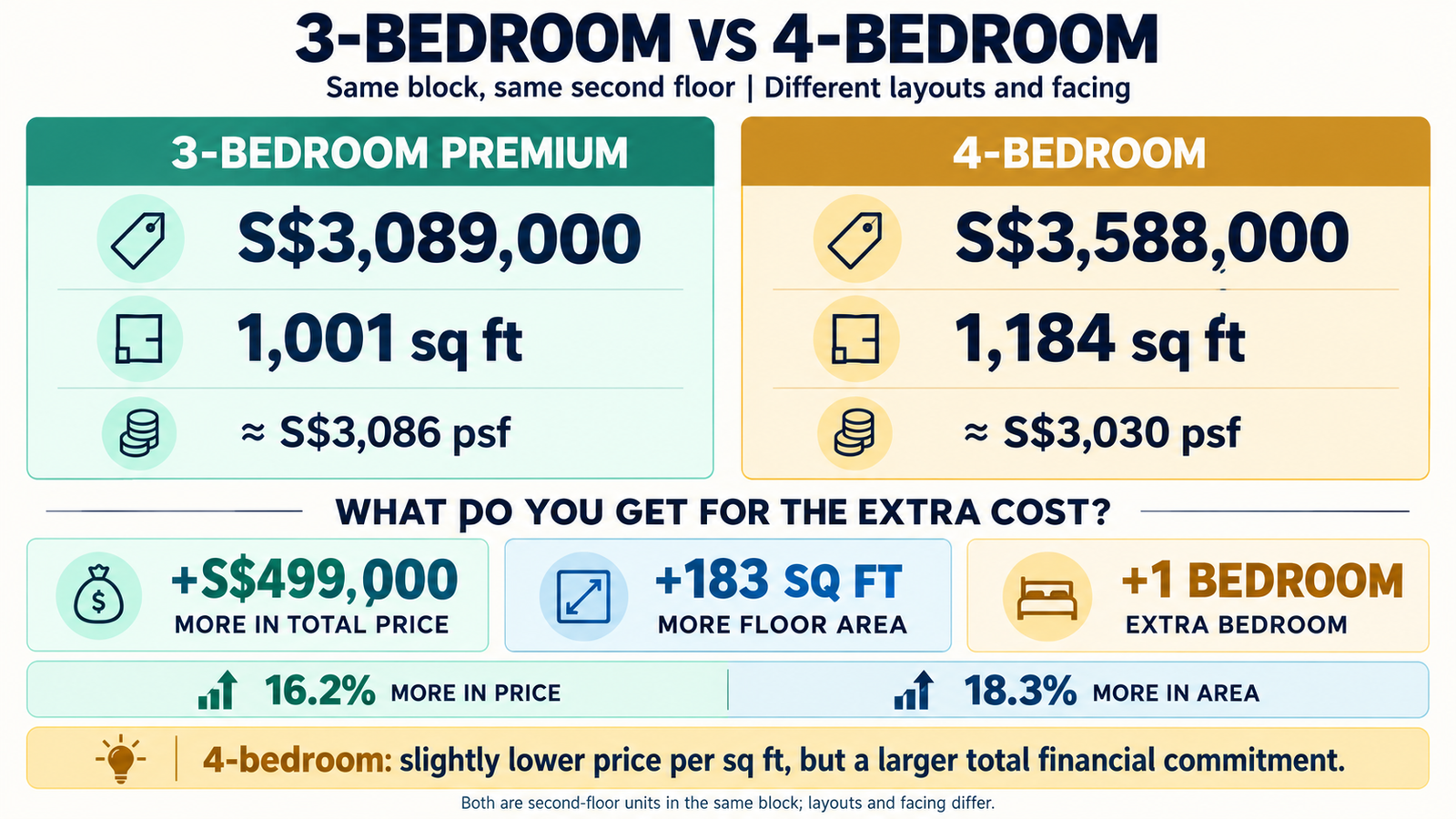
Compare a 1,001 sq ft three-bedroom premium at S$3.089 million, a 1,184 sq ft four-bedroom at S$3.588 million. Both are on the second floor of the same block, although their layouts and facing differ. [1][2]
The four-bedroom costs S$499,000 more for another 183 sq ft and one extra bedroom. That is 16.2% more money for 18.3% more floor area. Its price per square foot is slightly lower, but the larger total commitment still matters more to your household budget.
I would consider the extra room if it solves a lasting need, such as separate rooms for two children and a home office. If it will mostly sit empty, the three-bedroom may leave you with more money for family spending and savings.
How much money do I need to buy?
For this example, assume Singapore Citizen buyers aged 35, no residential property or outstanding housing loan after selling their previous home, and bank approval for a 75% loan over 30 years. Assume the valuation equals the purchase price and sufficient eligible CPF Ordinary Account savings where CPF is used. These assumptions do not apply automatically to every upgrader. [8][9]
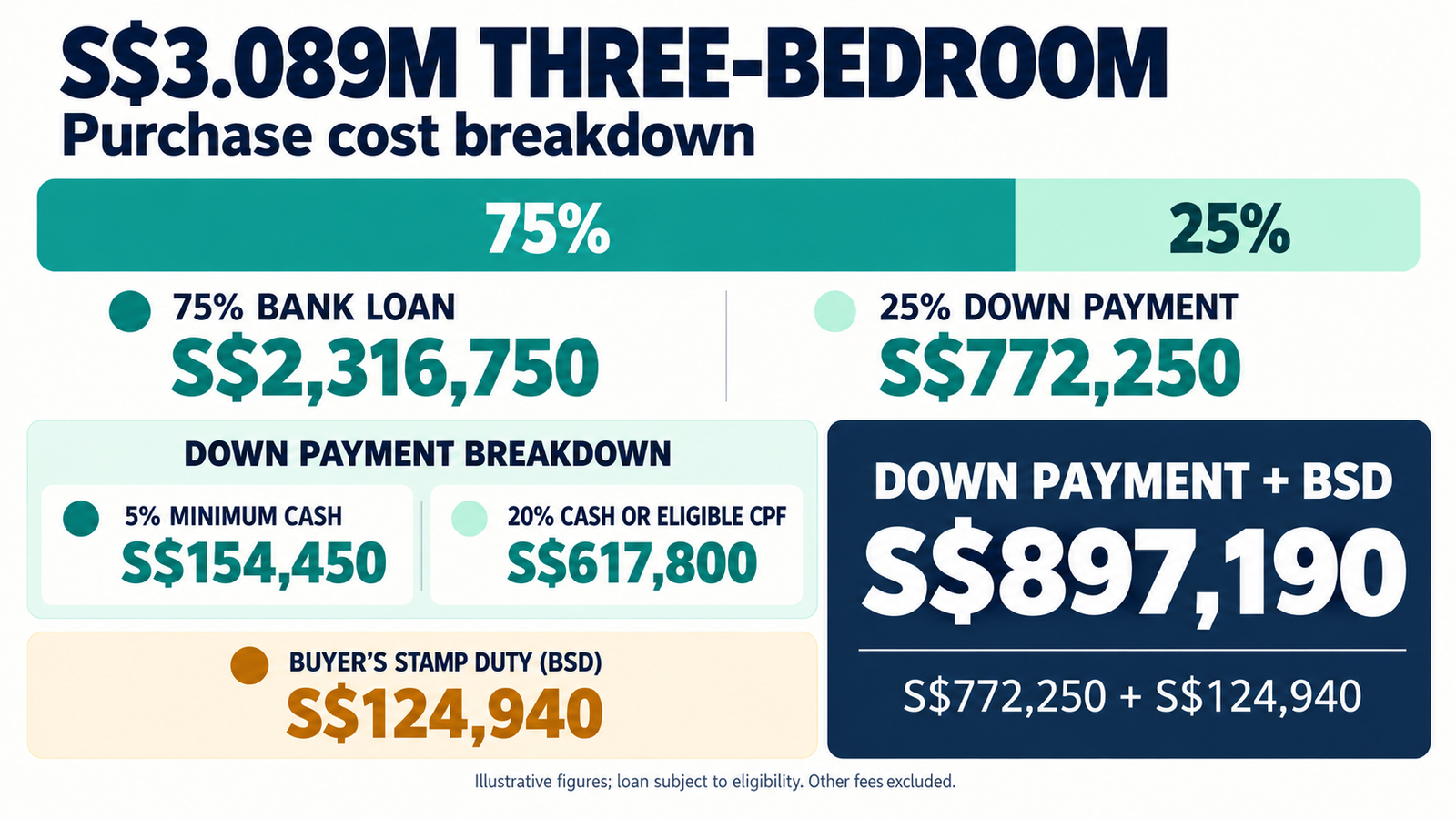
For the S$3.089 million three-bedroom, the loan is S$2,316,750. The 25% down payment is S$772,250, comprising at least S$154,450 in cash and S$617,800 in cash or eligible CPF savings. Buyer’s Stamp Duty, the tax on the purchase, adds S$124,940. The down payment and this tax total S$897,190. [9][10]
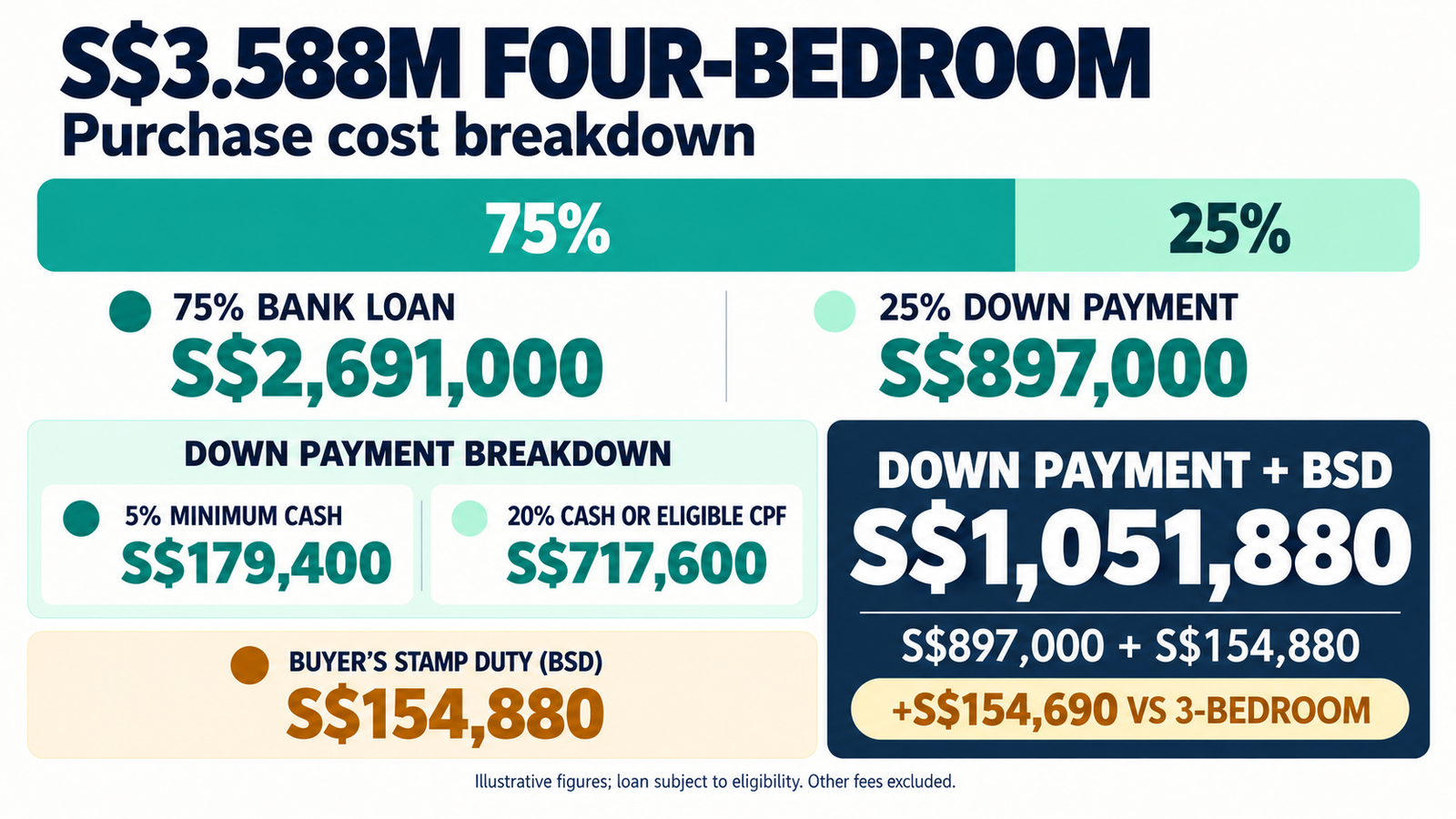
For the S$3.588 million four-bedroom, the loan is S$2,691,000. The down payment is S$897,000, comprising at least S$179,400 in cash and S$717,600 in cash or eligible CPF savings. Buyer’s Stamp Duty is S$154,880. The combined amount is S$1,051,880, or S$154,690 more than the three-bedroom. [9][10]
No Additional Buyer’s Stamp Duty, or ABSD, applies under these Singapore Citizen first-property assumptions. Both budgets exclude legal and loan-related fees, furnishing, moving, temporary accommodation and an emergency reserve. They are funding totals, not amounts all payable on booking day. [11]
What would I pay each month?
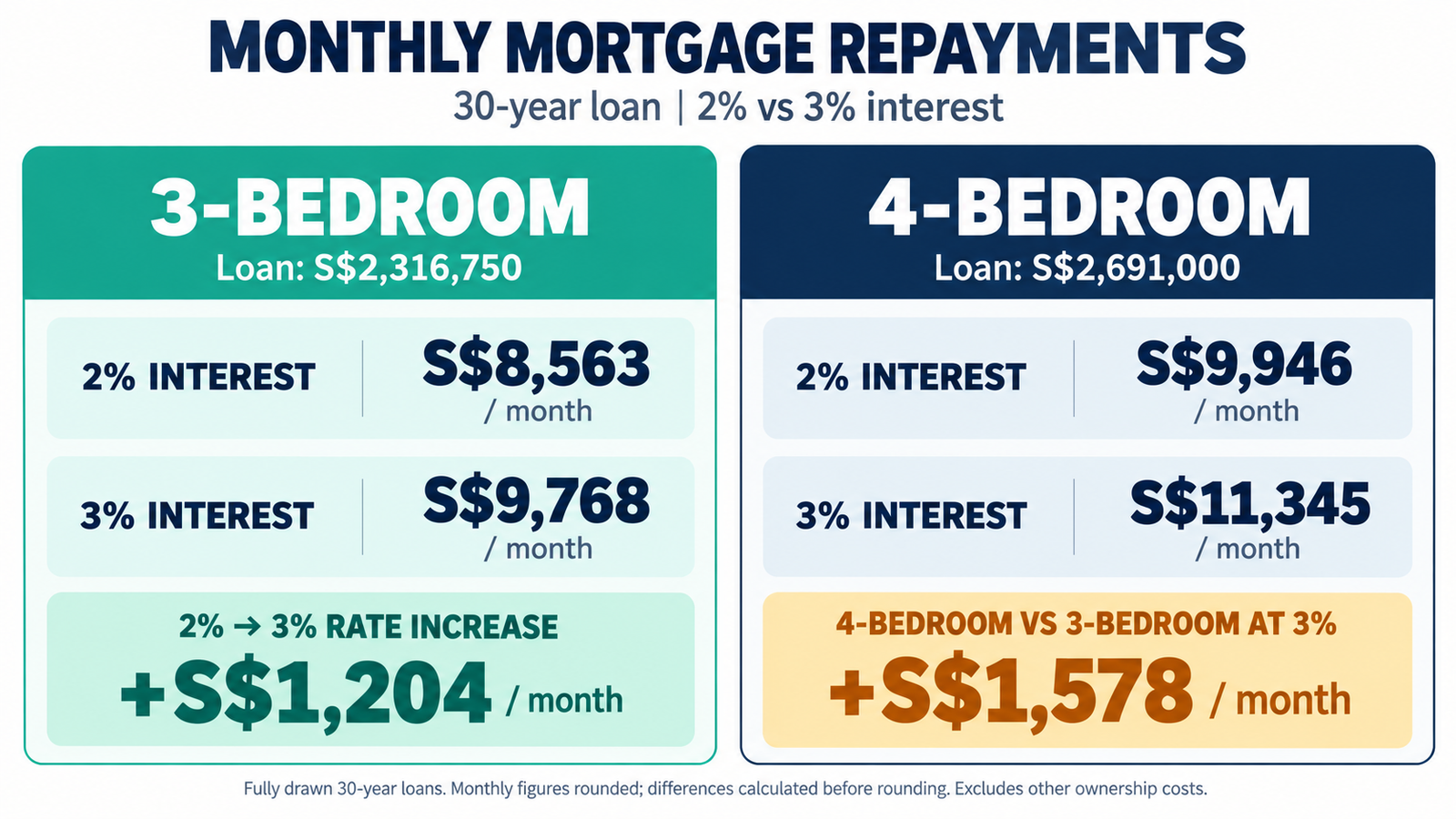
For the three-bedroom’s S$2,316,750 loan, a fully drawn 30-year loan costs about S$8,563 a month at 2%, or S$9,768 at 3%. That is about S$1,204 more each month, calculated before rounding.
For the four-bedroom’s S$2,691,000 loan, the equivalent payments are about S$9,946 at 2%, or S$11,345 at 3%. Choosing the four-bedroom adds about S$1,578 a month at 3%, before other ownership costs.
These are examples with an unchanged rate, not bank offers. A new launch is paid for in stages as construction progresses, so early loan payments usually differ from the fully drawn figures. Budget for the later commitment, not just the first few instalments. [15]
Banks also assess your other debts and income. The Total Debt Servicing Ratio limits total monthly debt repayments to 55% of assessed monthly income, and banks use at least a 4% assessment rate when prevailing housing loan rates are lower. Passing the bank’s assessment does not mean the payment will feel comfortable for your family. [8][17]
What else goes into the monthly bill?
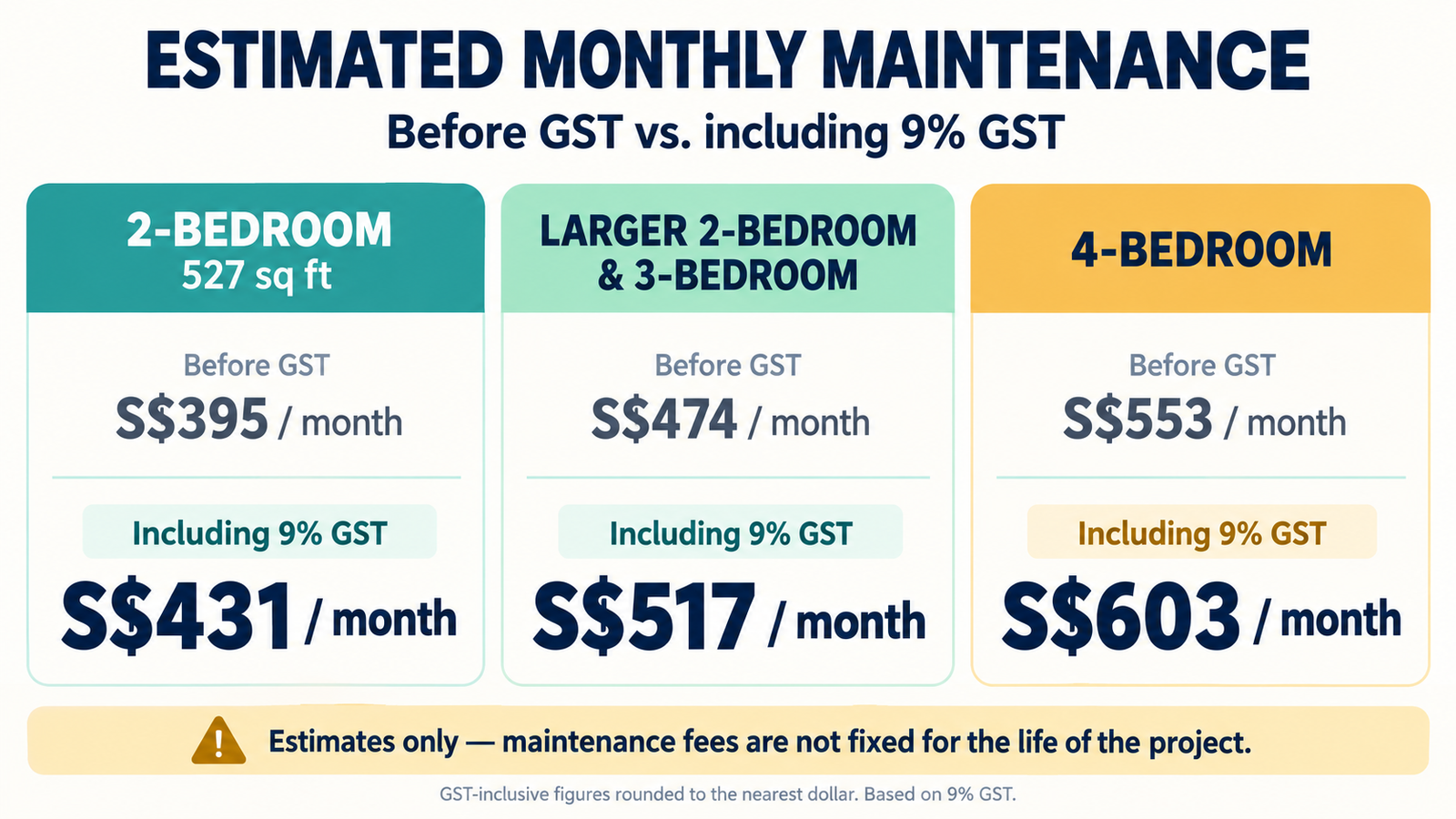
Estimated maintenance is S$395 a month before GST for the 527 sq ft two-bedroom, S$474 for larger two-bedroom and three-bedroom homes, and S$553 for four-bedroom homes. At today’s 9% GST, that is approximately S$431, S$517 and S$603 respectively. These are estimates, not fixed charges for the life of the project. [1][16]
At 3%, the three-bedroom’s loan and estimated maintenance alone come to about S$10,284 a month. The four-bedroom comes to about S$11,948. Add property tax, insurance, utilities, repairs and any parking charges before deciding on a comfortable monthly budget.
Would rent cover the costs if my plans change?
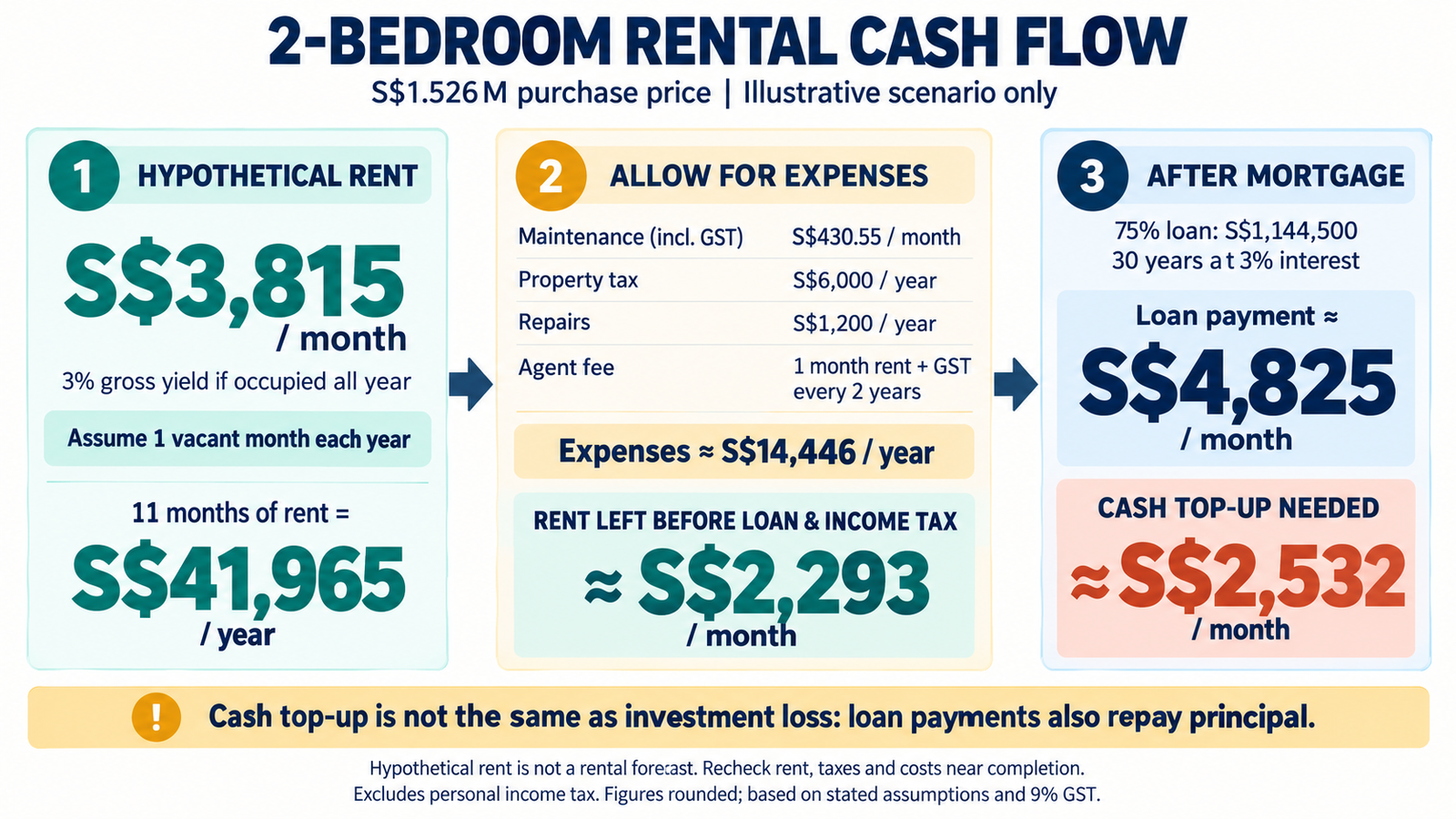
Use the S$1.526 million two-bedroom as a planning example. Hypothetical rent of S$3,815 a month gives a 3% return before expenses if occupied all year. It is not an estimate of what a tenant will pay.
Allow for one empty month a year, maintenance of S$430.55 a month including current GST, a S$6,000 annual property-tax and S$1,200 for repairs. Also assume an agent fee of one month’s rent plus GST every two years tenancy. That leaves about S$2,293 a month before the loan and any personal income tax.
A 75% loan over 30 years at 3% costs about S$4,825 a month, leaving roughly S$2,532 to add from other funds. Loan payments include repayment of the amount borrowed, so this cash shortfall is not the same as an investment loss. Actual rent, tax and expenses need a fresh check near completion.
My view: who should consider Dunearn House?
I would shortlist Dunearn House for households that value this part of Bukit Timah, can wait for completion and have a clear reason for choosing the layout. The strongest case is for a home you will use for years, supported by existing MRT access and practical facilities. The main trade-off is the substantial cost of the remaining family-sized homes.
For HDB upgraders, the S$3.089 million starting point for the remaining three-bedroom premium units is the key reality check. Compare the usable space with your flat, then test the move using a realistic sale price and a savings buffer. If it leaves too little room for family spending, consider other locations or completed resale homes.
For condo upgraders, the fourth bedroom may justify the extra S$499,000 when it solves a long-term space problem. Compare what you gain against your current home, including storage, bathrooms, parking and daily travel. Newer does not always mean a better fit.
For family buyers, school planning and the moving date should work even without your first-choice school. For right-sizing buyers, I would pay particular attention to the two-bathroom layouts, walking routes and funds left after the move.
My decision rule is simple: choose the unit that improves daily life, fits a budget you can sustain and would still make sense if prices stayed flat for several years. Start with two actual units and a complete moving budget. The future Turf City plans should strengthen an already sensible purchase.
Common buyer questions
1. Is Dunearn House freehold?
No. It has a 99-year lease starting on 30 September 2025. The lease starts from the land-lease date, not when you collect your keys. [1]
2. What is the latest starting price for Dunearn House?
The 28 October 2026 price check lists a 527 sq ft two-bedroom at S$1.526 million, a 1,001 sq ft three-bedroom premium at S$3.089 million and a 1,184 sq ft four-bedroom at S$3.588 million. Prices and availability can change. [2]
3. When can I move into Dunearn House?
The project factsheet gives 31 December 2030 as the expected notice of vacant possession date. Confirm the contractual date and handover process with your lawyer and developer before arranging a sale, rental or school move. [1]
4. Is a two-bedroom suitable for right-sizing?
It can be, if the rooms, storage and daily routes suit your needs. The 527 sq ft layout has one bathroom, while the 614 sq ft premium layout has two. Decide based on how you will live, not only the lower total price. [1]
5. Will the Turf City plans guarantee a resale profit?
No. Better connections and amenities could support demand, but future supply, market conditions and your purchase price also matter. Buy a home you can comfortably hold and judge any gain after all buying, ownership and selling costs.
Disclaimer
This report is for informational purposes only and is based on available data and assumptions at the time of preparation. Actual outcomes may differ due to market conditions, execution, and other uncertainties. No guarantee of accuracy, completeness, or future performance is made. Readers should independently verify key information before making decisions. John Lai shall not be held responsible for any subsequent changes or inaccuracies.
Sources
Project information, prices and policies were checked as at 28 October 2026. Prices are dated indications. Financial examples do not establish loan, tax or school eligibility. Future plans and completion dates may change.
[1] Dunearn House project facts, site plan, unit mix and floor plans, 10 July 2026. Private project records, checked 28 October 2026.
[2] Dunearn House unit price and inventory check, 28 October 2026. Private project records.
[3] Frasers Property, Dunearn House launch, 8 July 2026.
[4] Frasers Property, launch-weekend sales, 26 July 2026.
[5] CNA, P1 registration changes from 2027, updated 8 October 2026. Confirm your case with MOE and OneMap.
[6] URA, Bukit Timah Turf City plans, 23 May 2024.
[7] LTA, Cross Island Line Phase 2, 7 July 2025.
[8] MAS, housing loan limits and debt assessment.
[9] MoneySense, Buying a property: How much can you afford?, updated 22 October 2026.
[10] IRAS, Buyer’s Stamp Duty.
[11] IRAS, Additional Buyer’s Stamp Duty.
[12] IRAS, Seller’s Stamp Duty for residential property.
[13] CPF Board, housing refunds and use of refunded proceeds.
[14] IRAS, ABSD remission for a married couple.
[15] URA, Home Buyers’ Guide and buying-property eligibility guidance.
[16] IRAS, GST rates.
[17] MAS, housing-loan affordability safeguards, 7 October 2026.