18 Oct 2026
Should I Buy a New Launch or Resale Condo?
New launch or resale condo in Singapore? Understand the costs, moving plans and conditions that can give a well-priced new launch stronger capital-growth potential.

John Lai | ERA
Updated 20 October 2026
Which should you choose?
Start with resale if you need a home sooner or want to inspect the actual space before buying. If you can wait and want long-term price growth, give a well-priced new launch closer consideration. Compare the layout, location and full cost with resale alternatives. The better choice should meet your needs and stay affordable throughout your ownership.
This guide focuses on private condos. A new launch means a home bought from the developer before completion. Resale means a completed home bought from an owner. New executive condos have different buying rules and are outside this guide.
The buying approach works in different market conditions. Prices, tax rules and loan terms can change. The examples below show how to compare your options. Replace the assumptions with the figures and rules that apply when you buy.
Start with the home you need
Decide how many usable bedrooms you need, where you want to live and when you need to move. Then set a price range that leaves room for taxes, renovation and savings. A S$1.5 million to S$2 million home budget does not cover every buying cost.
Think beyond your household today. Will you need space for a child, a parent or working from home? A cheaper home can become an expensive choice if you need to move again soon. A larger home also needs to justify the extra payments.
For example, a family needing three usable bedrooms within a year should start with completed homes that meet that deadline. A couple with a suitable place to stay for several years can compare new launches without the same moving pressure.
Compare what each home offers you
Neither new launch nor resale automatically means better value. Compare homes in locations you would genuinely consider, with similar bedroom needs and access to work, schools and daily essentials.
Use recent completed sales to assess an asking price. URA provides private residential transaction information. Check the sale date, size, floor, age and lease. A nearby sale is useful evidence, but a different unit may deserve a different price. [1]
Look at both the total price and the price per square foot. A smaller home may cost less overall while costing more for each square foot. A larger resale home may give you more room, but renovation can reduce the savings.
Ask one clear question: what do I gain by paying more? The answer could be a shorter commute, a better layout or a home that suits your family for longer. Pay for benefits you will use.
Check how the space works
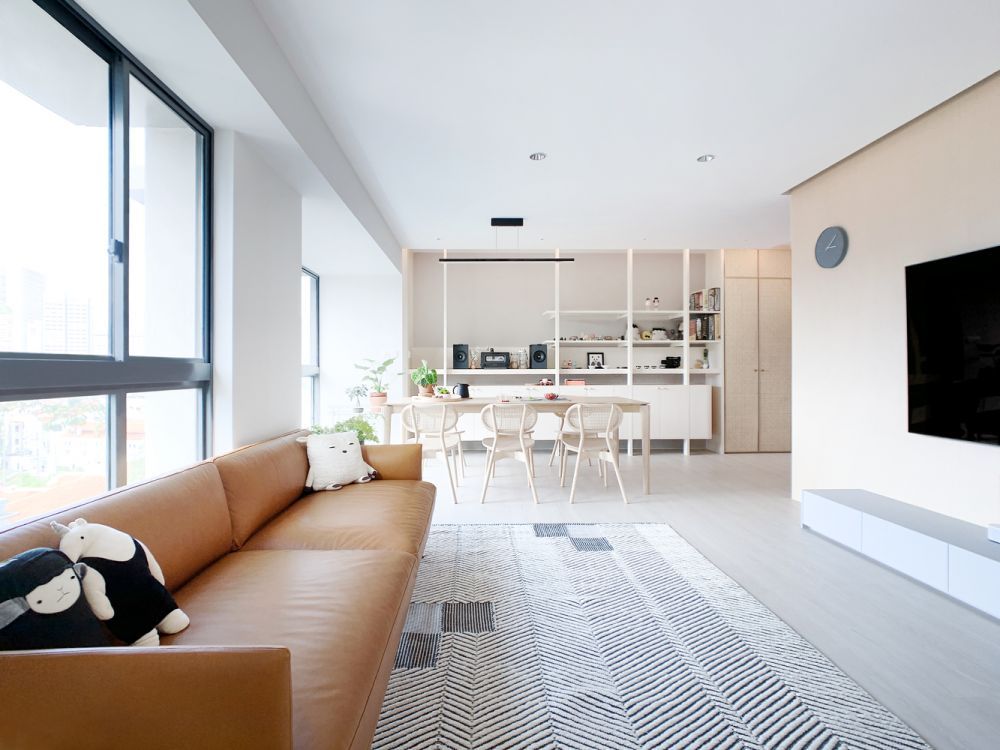
With resale, you can inspect the actual rooms, natural light, noise and condition. Visit at different times if possible. Check where your beds, dining table and storage will go. Ask a contractor to assess any work that could affect your budget.
With a new launch, work from the floor plan, specifications and purchase contract. Check room measurements and which fittings are included. A showflat helps you picture the home, but decorative features and furniture may not come with your unit. URA’s buyer guidance explains the documents and purchase process. [1]
A newer home can offer fresh fittings and facilities you prefer. An older home can offer a layout or room size that works better for you. Compare the actual homes before deciding which benefit matters more.
Building age and remaining lease are different. Check when the lease began. Buying a newly completed leasehold home does not mean the full lease starts when you collect the keys. Remaining lease can affect CPF use and financing, so confirm both for the home you choose. [2]
A S$1.5 million resale versus a S$1.8 million new launch
Here is an illustrative comparison. Assume a Singapore Citizen buying a first residential property, aged 35 or younger, with no existing housing loan. The bank approves a 75% loan over 30 years, and the purchase price equals the valuation.
The stamp-duty figures use the rules checked on 19 October 2026. Buyer’s Stamp Duty is a purchase tax. Additional Buyer’s Stamp Duty, or ABSD, depends on factors such as citizenship and properties already owned. No ABSD applies to the assumed first-property Singapore Citizen purchase under those rules. [3][4]

The S$1.5 million resale
The loan is S$1.125 million. You contribute S$375,000 as the down payment, including at least S$75,000 in cash. Buyer’s Stamp Duty adds S$44,600. The down payment and this tax total S$419,600. [3][5]
The S$1.8 million new launch
The loan is S$1.35 million. You contribute S$450,000 as the down payment, including at least S$90,000 in cash. Buyer’s Stamp Duty adds S$59,600. The down payment and this tax total S$509,600. [3][5]
What does the difference mean?
The more expensive home needs S$90,000 more for the down payment and tax, plus a S$225,000 larger loan. The minimum cash amounts above are already included in the down payments. Eligible CPF savings can cover part of the balance, subject to the rules and payment arrangements. [2][5]
This gap comes from the chosen prices. A new launch does not automatically require S$90,000 more than resale. At the same price, valuation and approved loan percentage, the down payment and applicable purchase taxes would be the same for the same buyer. The timing and other expenses can differ.
The 75% loan is an assumption, not an entitlement. Age, income, existing debt, loan length and valuation affect approval. Get a bank assessment before committing. [5]
Add the costs beyond the down payment
For each home, allow S$3,000 for legal and valuation fees and keep S$30,000 as a cash reserve. Assume S$60,000 for resale renovation and furniture, compared with S$30,000 for the new launch. These are planning allowances, not quotations.
Adding those amounts gives S$512,600 for the resale purchase and S$572,600 for the new launch. These totals combine your contribution towards the purchase, the assumed extra costs and the reserve you keep. Eligible CPF can fund only permitted items. Renovation, furniture and your cash reserve need separate funding.
The difference is now S$60,000 because we allowed S$30,000 more renovation spending for resale. A well-kept resale home could need less work. A new launch with extensive custom fittings could cost more.
The S$30,000 reserve stays in your savings. Moving, temporary accommodation, any buyer’s agent fee and ongoing living costs are extra. Choose a reserve that fits your household’s bills and income stability.
Can you manage the full monthly bill?
Using the same loans over 30 years, a constant 2% annual interest rate gives payments of about S$4,158 a month for resale and S$4,990 for the new launch. At 3%, the payments are about S$4,743 and S$5,692.
At 3%, the larger loan needs about S$949 more each month. If maintenance costs S$350 for resale and S$450 for the new launch, the combined loan and maintenance bills become about S$5,093 and S$6,142.
The interest rates and maintenance fees are examples. The calculations assume the full loan has been released and the interest rate stays unchanged. Property tax, insurance, repairs and living costs are extra. The 2% and 3% examples are not bank offers or the highest rates you might face.
Ask your bank to show the payments under the actual package, including after any fixed-rate period. Then consider how you would cope with higher rates or a temporary drop in income. Loan approval tells you what the bank will lend. Your household budget tells you what feels manageable. [5]
New launch payments start smaller, then grow
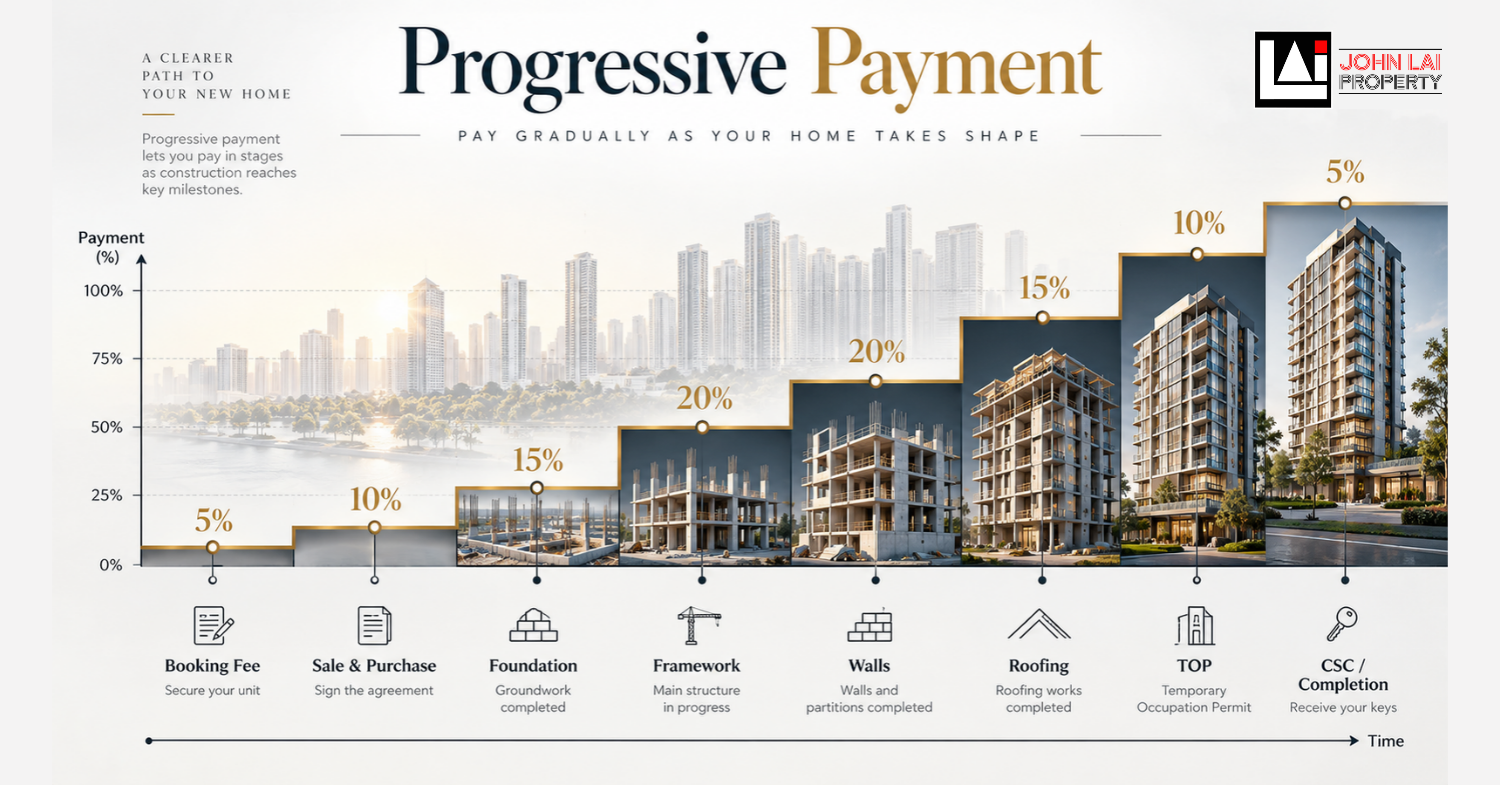
For a home under construction, payments are usually linked to building progress known as progressive payment. The bank releases the loan in stages. Early repayments can therefore be lower, then rise as more of the loan is used. [6]
This arrangement helps with payment timing. You still need to afford the full repayment later. Check the payment schedule and make sure your cash and eligible CPF will be available when each payment is due.
With resale, most purchase funds are needed by completion, so the full loan generally starts earlier. In return, you can move in or seek a tenant once the home is handed over and ready.
Include the cost of waiting
If you need temporary accommodation, add that to your new-launch plan. At an assumed S$3,500 a month, three years of rent costs S$126,000. An extra six months adds S$21,000.
That is the accommodation bill alone. To compare both choices fairly, look at all costs over the same period, including loan interest, taxes and maintenance. Staying with family may reduce rent, but the arrangement still needs to work for everyone.
For resale, confirm the actual handover date, any existing tenancy, the seller’s moving arrangements and renovation time. For a new launch, check the expected key collection and the delivery terms in the contract. Allow some flexibility in your moving plan. [1]
Check maintenance before judging the building’s age
Fees depend on the estate’s services, facilities and spending. New facilities also need ongoing upkeep.
For resale, ask for the maintenance charges, recent meeting records and planned major works. Check the sinking fund, which is money set aside for longer-term repairs and replacements. Owners may need an extra contribution if the estate has insufficient funds. [7]
For a new launch, check the estimated fees and what those fees include. Treat the estimate as a starting point for your budget. For either choice, include repairs inside your own unit as well as contributions to the estate.
If you own an HDB flat, plan the sale and purchase together
Before buying a private home, confirm that you have met your HDB minimum occupation period and the rules applying to your household and flat. Do not assume that buying an unfinished condo allows you to bypass these requirements. [8]
Next, work out the money you will actually receive. Suppose your flat sells for S$800,000. Deduct a S$250,000 remaining loan, S$280,000 CPF refund and S$20,000 selling costs. That leaves S$250,000 cash. The S$280,000 goes separately back to CPF.
The CPF refund includes the savings used for the flat and the interest those savings would have earned. Age and retirement requirements can affect how the refund is allocated and how much you can use for your next home. Confirm the available amount and timing. [9]
Selling first gives you a clearer budget, though you may need somewhere to stay. Buying first can give you more time to arrange the move, provided you can fund the overlap. Keeping an existing housing loan can reduce the next loan quantum available. [5]
If you still own a home when buying, additional purchase tax may apply. The amount depends on your ownership and citizenship circumstances. Check the applicable ABSD before paying a deposit. The first-property example above does not cover a buyer who keeps an existing home. [4]
Some married couples with a Singapore Citizen spouse can qualify for an ABSD refund on a jointly purchased matrimonial home. The tax must first be paid, and the sale and refund conditions must be met. Have your lawyer map out the relevant dates before choosing your buying order. [10]
If you want rental income, compare what is left after costs
Resale can earn rent sooner once the unit is available and a tenant is found. You can also check the project’s rental records. A new launch needs funding during construction without rental income from the unit.
Suppose a S$1.5 million home rents for S$3,500 a month. The annual rent is S$42,000, or 2.8% of the price before costs. A S$1.8 million home needs S$4,200 a month to match that percentage. These are assumed rents, not rental forecasts.
Paying 20% more therefore requires 20% more rent to keep the same return before expenses. Check whether comparable rental transactions support the higher rent. New fittings alone do not prove tenants will pay the difference.
Now deduct empty months, maintenance, property tax, insurance, repairs and tenant-finding costs. Compare the amount left with your loan repayments. Any shortfall needs funding from your own money. Some of the loan payment reduces your debt, but the full payment still needs to be made.
For a fair investment comparison, include buying taxes, construction-period funding and eventual selling costs. Assess the whole ownership period. Rental income after key collection is only one part of the result.

Why I would consider a new launch for capital growth
Capital appreciation means your home increases in value after you buy. If you can wait for completion and want long-term price growth, I would give a well-priced new launch closer consideration. The opportunity is to buy at a sensible price, then sell a relatively young home with features that future buyers want.
A good starting price gives you room to grow
The strongest opportunity is a new launch priced reasonably against nearby alternatives. Early buyers may find an attractive price or a better choice of units. That advantage matters only if the price compares well with similar homes. An early-bird label alone does not establish a good deal. [13]
I would compare the price with newer resale condos nearby and check what the extra cost buys you. A modest premium for a better layout, stronger convenience or a longer remaining lease can be easier to justify than a large premium for newness alone.
A finish home can make the home more attractive
Before completion, buyers have to judge the home from plans and accept a wait. Once completed, they can see the actual rooms, facilities and surroundings. The home can also appeal to buyers who need to move sooner.
I see this change as a potential advantage for an early buyer. A well-executed development may become more appealing when people can experience the finished home. The benefit still depends on demand and the price buyers will pay. Collecting the keys does not automatically create a price increase.
A younger home can stay competitive when you sell
After several years of ownership, a new-launch purchase can still be relatively young compared with older condos nearby. If the layout, facilities and condition meet buyers’ needs, those features can help the home compete when you sell.
For leasehold homes, a longer remaining lease may also help with future buyers’ financing and CPF use. Check the actual lease dates. A new launch does not automatically have a longer lease than every resale alternative. A recently completed resale condo may offer similar advantages. [2]
Buy before useful improvements are fully reflected in the price
A confirmed transport link, new shops or other useful changes can make an area more convenient. A new launch may give you time to hold the home while those improvements take shape.
I would check whether the improvement is confirmed, when buyers can use the benefit and how much of that benefit is already included in the asking price. Nearby resale homes can gain from the same changes. The opportunity comes from choosing the right home at the right price.
How does resale differ?
With resale, you buy a completed home whose condition, surroundings and recent sale prices are easier to assess. Price growth may come from buying below comparable value, stronger demand or improvements to the estate and neighbourhood.
An older home may need more work to stay attractive, but age alone does not decide future gains. A well-kept resale condo bought at a good price can outperform a new launch bought too expensively.
My view on the better choice for growth
For a buyer who can wait, I would favour a new launch when the price is competitive, the layout serves a clear future buyer group and nearby supply looks manageable. These conditions give me a stronger reason to expect the home to remain attractive when sold.
The broad historical study I reviewed favoured resale overall. My preference here is for selected new launches with a clear buying advantage, rather than a claim that the whole category grows faster. [12]
Paying more needs to buy you something future buyers will value too. Compare the likely sale price with your full costs, including the construction period. That is how I would assess whether a particular new launch offers better capital-growth potential than the resale alternatives.
Think about the next buyer before you buy
Ask who would want your home later and what alternatives they could afford. A practical layout, convenient location and manageable total price can help your home appeal to buyers. Nearby competing homes and the remaining lease also matter.
A new launch becomes a resale home when you sell. Buyers will compare the home with other available choices. Paying a high starting price leaves less room for an attractive resale price after your costs.
Check Seller’s Stamp Duty, a tax that can apply when you sell within the holding period set by the rules for your purchase date. Key collection does not restart that holding period. Confirm the relevant dates with your lawyer. [11]
A higher sale price is not the same as profit. Allow for buying taxes, interest, renovation, ownership expenses and selling fees. Choose a home you can keep if selling takes longer than planned.

Think about the next buyer before you buy
Ask who would want your home later and what alternatives they could afford. A practical layout, convenient location and manageable total price can help your home appeal to buyers. Nearby competing homes and the remaining lease also matter.
A new launch becomes a resale home when you sell. Buyers will compare the home with other available choices. Paying a high starting price leaves less room for an attractive resale price after your costs.
Check Seller’s Stamp Duty, a tax that can apply when you sell within the holding period set by the rules for your purchase date. Key collection does not restart that holding period. Confirm the relevant dates with your lawyer. [11]
A higher sale price is not the same as profit. Allow for buying taxes, interest, renovation, ownership expenses and selling fees. Choose a home you can keep if selling takes longer than planned.
My view: match the choice to your next stage of life
For HDB upgraders who need more usable space and an earlier move, I would begin with resale homes that fit the family. Inspect the rooms and get a renovation estimate. Then compare the purchase cost with your realistic sale proceeds. The upgrade should improve daily life while leaving enough savings to manage the move.
For first-time condo buyers with a suitable place to stay, a new launch can work well. Focus on whether the home will still suit you when ready. The staged payments can help with timing, but the full loan and the cost of waiting must fit your budget.
For investors focused on long-term capital growth who can wait, I would shortlist new launches with competitive prices, practical layouts and manageable nearby supply. A younger completed home may appeal to future buyers, provided the initial premium is reasonable. For rental income sooner, compare completed resale homes. In both cases, calculate the full costs and the money you may need to add each month.
My decision rule is simple. Shortlist homes that meet your space and location needs. Compare the full cost, moving date and ongoing payments. Pay more only when the benefit matters to you and the extra commitment stays comfortable. If a lower-cost home already meets your needs, keeping more savings is a valid choice.
Let’s compare your options
Have a new launch or resale condo in mind? WhatsApp me at 84440899. Share your budget and whether you need to sell first. We can work through the space, costs and moving plans together.
Common buyer questions
1. Is a new launch always more expensive than resale?
No. The answer depends on the location, size, lease, condition and unit. Compare the full price of homes you would actually buy. Add renovation and waiting costs before deciding which offers better value.
2. Is a new launch easier to afford because payments are made in stages?
Early repayments can be lower while the bank releases the loan in stages. That helps with timing. You still need to afford the down payment, taxes and eventual full repayment. [6]
3. Is an older resale condo a poor choice?
Age alone does not decide value. Check the layout, condition, remaining lease, estate finances and asking price. An older home can be a practical choice when those factors suit your needs.
4. Should I sell my HDB flat before buying a condo?
Selling first can make the budget clearer. Buying first requires enough funds for overlapping commitments and any applicable additional tax. Work out both plans with your bank and lawyer before choosing. [4][5][10]
5. Which choice gives better returns?
A well-priced new launch can be a strong choice for capital growth if you can wait and the completed home will appeal to future buyers. Resale can also perform well when bought at a competitive price. Compare the actual homes, full ownership costs and likely selling competition. Neither category has a fixed appreciation rate.
About the examples and sources
Policy references, example tax calculations and capital-appreciation research were reviewed on 19 October 2026. The growth assessment explains conditions that may support selected new launches, rather than forecasting returns for either category. Purchase prices, rents, rates and expense allowances in the worked examples are illustrations. Check the rules and actual figures for your purchase date.
Disclaimer: Information is accurate to the best of our knowledge at the time of research. Prices, figures and details are subject to change without notice. John Lai shall not be held responsible for any subsequent changes or inaccuracies.
Sources
[1] URA, Buying Property
https://www.ura.gov.sg/guidelines/property-and-business-owners/property/buying-property/
[2] CPF Board, CPF savings for your next home
https://www.cpf.gov.sg/member/infohub/educational-resources/how-much-cpf-oa-can-you-use-for-your-next-home
[3] IRAS, Buyer’s Stamp Duty
https://www.iras.gov.sg/taxes/stamp-duty/for-property/buying-or-acquiring-property/buyer's-stamp-duty-(bsd)
[4] IRAS, Additional Buyer’s Stamp Duty
https://www.iras.gov.sg/taxes/stamp-duty/for-property/buying-or-acquiring-property/additional-buyer's-stamp-duty-(absd)
[5] MoneySense, Buying a property: how much can you afford?
https://www.moneysense.gov.sg/buying-a-property-how-much-can-you-afford/
[6] DBS, Buying a property under construction
https://www.dbs.com.sg/personal/articles/nav/my-home/buying-property-under-construction
[7] BCA, Strata Management Guide 1: Concept of Strata Living
https://www.bca.gov.sg/publications/bmsm/others/SMG1-Concept-of-Strata-Living.pdf
[8] HDB, Acquiring Private Property
https://www.hdb.gov.sg/managing-my-home/home-ownership/acquiring-private-property
[9] CPF Board, CPF refund when selling or transferring property
https://www.cpf.gov.sg/member/home-ownership/using-your-cpf-to-buy-a-home/cpf-refund-when-selling-or-transferring-property
[10] IRAS, Remission of ABSD for a Married Couple
https://www.iras.gov.sg/taxes/stamp-duty/for-property/appeals-refunds-reliefs-and-remissions/common-stamp-duty-remissions-and-reliefs-for-property/remission-of-absd-for-a-married-couple
[11] IRAS, Seller’s Stamp Duty for Residential Property
https://www.iras.gov.sg/taxes/stamp-duty/for-property/selling-or-disposing-property/seller's-stamp-duty-(ssd)-for-residential-property
[12] Vairavan Shanmugam, New Launch vs. Resale Returns in Singapore Private Housing, June 2026 study, updated 15 October 2026. EC-excluded analysis.
https://www.vairavan.tech/research/new-launch-vs-resale-returns-singapore-private-housing
Checked 19 October 2026.
[13] EdgeProp, Buying new condo units isn’t a profit guarantee, 9 October 2020.
https://www.edgeprop.sg/property-news/buying-new-condo-units-isnt-profit-guaranteeChecked 19 October 2026.